








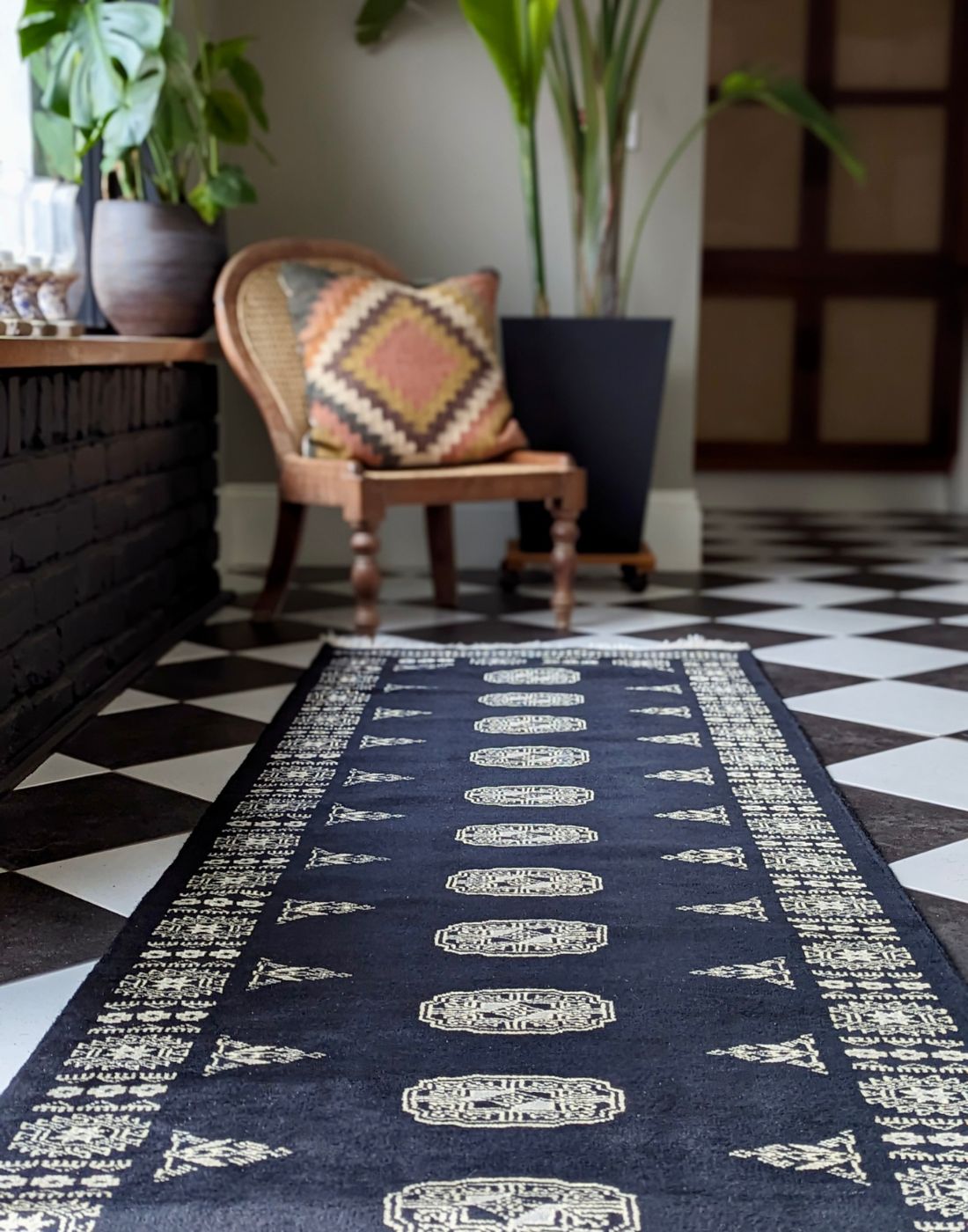



A durable rug can last a lifetime if cared for properly. Understanding how to clean a rug by hand is one of the most effective ways to extend its life and preserve its beauty.
This is a general guide, designed to complement the care instructions typically found on your rugs manufacturing label. We would always advise referring to the manufacturing care label, first and foremost. This step by step guide offers simple methods for lifting stains, freshening up materials and caring for rugs made from wool, jute, sisal, viscose and silk.
Wool
Wool is naturally durable and has a natural degree of stain resistance, but it still benefits from regular care. Follow these steps to keep it clean and looking its best:
-
Vacuum weekly: use the lowest suction setting and avoid using a vacuum with a rotating head or beater bar. This helps lift dirt and debris without damaging the pile.
-
Act quickly if there is a spill: blot the area immediately using a clean, dry white cloth. Avoid coloured cloths - dyes from materials like blue or red towels can transfer onto the rug.
-
Prepare a mild cleaning solution: mix a small amount of non-biological detergent with warm water.
-
Spot clean gently: dip a white cloth into the solution, wring it out, and gently blot the stain. Don’t rub - wool fibres are more delicate when wet, and rubbing can spread the stain or damage the yarn.
-
Avoid over-wetting the rug: use as little moisture as possible. This is especially important for Persian and Oriental wool rugs, as the dyes may bleed if exposed to too much water.
-
Allow the rug to dry completely: once cleaned, allow the rug to air dry fully in a well-ventilated space. If further cleaning is needed, repeat the process only once the rug is completely dry.
-
Avoid carpet shampoos and harsh cleaners: these can damage the fibres, cause shrinkage, or lead to colour bleed.
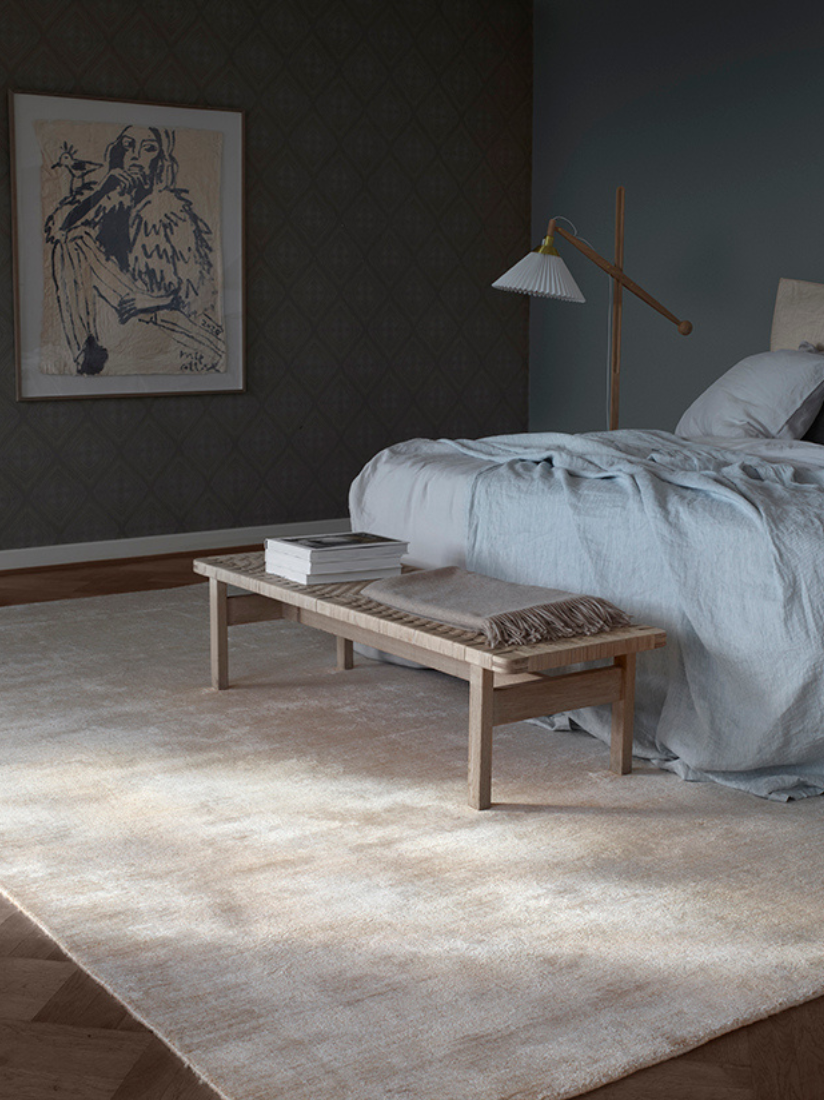
 Marimekko Lokki Butter
Jute
Jute is a natural material that’s best maintained with regular care. Jute is best kept dry, so vacuuming on a low setting with the beater bar disengaged is the best way to keep dust and dirt at bay. Follow these steps to clean this material:
-
Blot spills immediately: if a spill occurs, press a clean, dry cloth firmly into the area to absorb as much liquid as possible. Act quickly to prevent the moisture from sinking into the material.
-
Prepare a diluted cleaning solution: mix a small amount of non-biological detergent with warm water. Use only a very small amount of liquid.
-
Lightly dab the stain: dampen a clean cloth with the solution and wring out all excess moisture. Gently dab the stained area, then use a dry cloth or paper towel to soak up any remaining dampness.
-
Let the rug dry completely: allow the rug to air dry fully in a well-ventilated area before placing it back in the room.
-
Avoid excess water: never soak a jute rug or use steam cleaning methods - too much moisture can lead to staining.

Sisal
Sisal is a plant-based material that should always be kept dry. It doesn’t respond well to moisture and can stain easily, so keeping your rug out of areas prone to moisture is advised. Follow these steps to keep your sisal rug in good condition:
-
Shake out loose dirt: take the rug outside and give it a thorough shake to dislodge surface debris.
-
Vacuum weekly: use a low suction setting and vacuum in the direction of the fibres to avoid damage.
-
Blot spills immediately: if liquid is spilled, use a clean, dry white cloth to blot the area, absorbing as much moisture as possible.
-
Lift stubborn dirt with a soft brush: a soft-bristled brush can help remove any embedded dirt from the pile. Use gentle strokes to avoid damaging the material.
-
Let the rug dry completely: if any moisture is introduced during cleaning, allow the rug to dry fully in a well-ventilated area before placing it back.

Viscose and Silk
These delicate pieces require a gentle approach. Viscose and silk are prone to marking and don’t tolerate moisture well. Follow these steps to care for these rugs safely:
-
Use a soft brush for regular upkeep: instead of vacuuming, use a soft handheld brush to remove dust and lift the pile. Always brush in the direction of the pile.
-
Blot spills immediately: should a spill occur, use a clean, dry white cloth to blot the area gently, absorbing as much liquid as possible without applying too much pressure.
-
Consider professional cleaning: do not use water or steam to clean viscose or silk rugs, as this can cause staining or distortion.
-
Create a cleaning solution at home: where professional cleaning isn’t possible, mix equal parts cold water and white vinegar.
-
Test the solution on a discreet part of the rug: if there’s no reaction, gently blot the stain using a clean white cloth. Do not soak the rug.
-
Let the rug dry completely: allow the rug to dry fully in a well-ventilated area, away from direct heat or sunlight. A hairdryer on a cool setting can be used to speed up the drying process if needed.
-
Avoid moisture and pressure: never saturate the rug, scrub the surface or expose it to excessive heat. These materials are highly sensitive and respond best to a careful, minimal-touch approach.